Why Skilled Labor Shortages Continue in 2026 and What Businesses Can Do About It
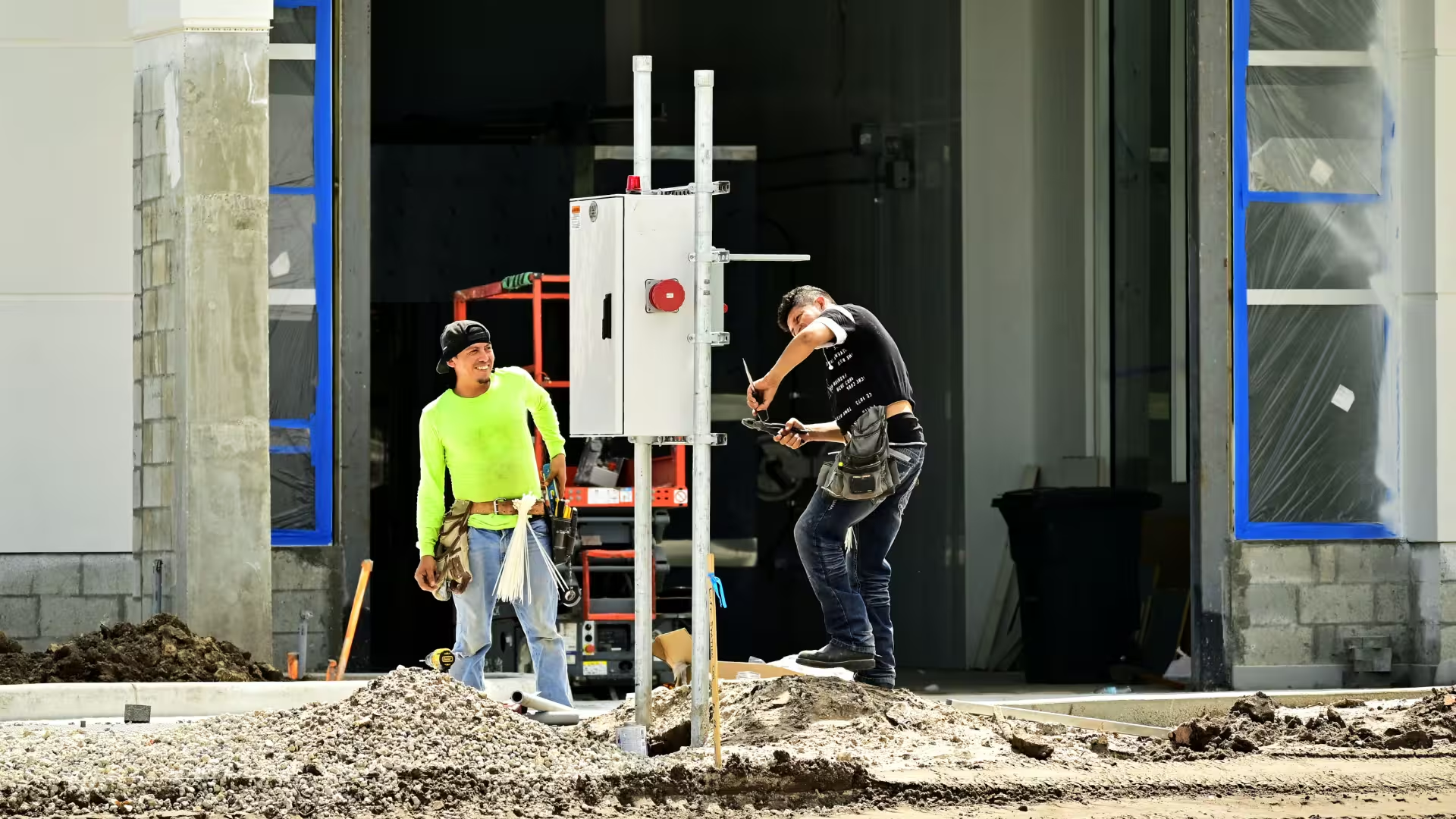
The skilled labor shortage isn't a headline from last year's news cycle. It's a structural, ongoing reality shaping how contractors, facility owners, and operations leaders plan, staff, and deliver projects in 2026. If your business depends on skilled tradespeople-electricians, welders, HVAC technicians, plumbers-you already feel the pressure. Here's why the gap persists, where it hits hardest, and what you can do about it now.
Why Skilled Labor Shortages Are Still a Problem in 2026
The U.S. unemployment rate held between 4.2% and 4.4% in the first half of 2026, yet job openings in construction, manufacturing, and logistics stayed elevated. In May 2026, there were approximately 7.6 million open jobs nationwide, with a disproportionate share in skilled trades and field-based roles that are hard to automate or offshore.
This isn't a temporary post-pandemic blip. The shortage stems from an aging workforce, a mismatch between the technical skills employers need and what job seekers have, and a decades-long decline in vocational training. Many skilled occupations require years of training and certification, which limits how fast new workers can enter the field, and labor force participation among older workers still hasn't fully rebounded.
For businesses that depend on vendor networks-contractors, facility managers, property operators-this means having vendors "available" on paper isn't the same as having qualified crews ready to execute. This article is a practical guide for anyone who needs reliable access to skilled labor to keep projects on schedule.
Demographic and Cultural Drivers Behind the Skilled Trades Gap
Long-running demographic shifts and cultural attitudes toward four-year degrees versus vocational paths remain core reasons the skilled labor shortage continues.
The retirement wave is accelerating. Baby boomers-born 1946 to 1964-still make up a significant share of journey-level skilled workers, and they're retiring faster than younger generations can replace them, pulling decades of craft knowledge out of the labor market. By 2030, every boomer will be at least 65, shrinking the pool of mentors and journeymen further.
Fewer workers entered the trades pipeline. For two decades, education systems emphasized four-year degrees over vocational training, and community college enrollment fell by roughly two-fifths from its 2010 peak. That's starting to turn: job-focused, vocational-track community college programs have been growing again since 2023, but the rebound hasn't closed the gap left by two decades of decline.
Perceptions are shifting, but slowly. Old assumptions about the trades-low pay, unstable work-don't hold up against the numbers. The national median wage for electricians is now $69,189 and for plumbers $63,800, with experienced workers earning well above that. That's landing with younger workers: 75% of Gen Z now associate white-collar desk jobs with burnout and instability, and interest in trade careers is climbing year over year. But new entrants are still arriving too slowly to offset retirements, and a thinned-out middle of mid-career professionals makes it harder to train apprentices on active job sites.
How Construction Labor Shortages Ripple Through the Broader Economy
Construction sits on the most visible front line of the worker shortage. Housing, data centers, and public infrastructure all depend on a stable pool of construction workers.
ABC estimates the industry needs roughly 349,000 additional workers in 2026 just to keep pace with demand, and 45% of contractors report at least one project delayed by workforce shortages in the past year. Multifamily housing in fast-growing Sun Belt metros like Austin, Phoenix, and Tampa is taking months longer than scheduled because contractors can't secure enough licensed electricians and HVAC technicians. Nationally, labor-driven delays and carrying costs are estimated to cost the economy $2.7 billion a year, on top of billions more in lost home-building activity.
Rising wages needed to compete for scarce talent push project costs higher, and limited crews force firms to turn down bids or stagger starts rather than run at capacity-constraining revenue and slowing regional growth.
The ripple effects extend well beyond construction. When key operational roles stay unfilled, delays in building warehouses, factories, and data centers strain supply chains and cloud infrastructure, and slower completion of schools, hospitals, and transportation projects means communities wait longer for critical public services.
Operational and Financial Impacts on Employers
The skilled labor shortage reshapes how businesses budget, schedule, and manage risk-even outside construction-because so many operations rely on external contractors and vendors.
Cost pressures. Higher wages, sign-on bonuses, per-diem rates for traveling trades, and overtime premiums compress margins. Pay and working conditions in some industries haven't kept pace with living costs, pushing workers toward other sectors, and open roles often don't line up geographically with where specialized talent is concentrated.
Productivity and quality risks. Understaffed crews rush work, skip steps, or extend shifts, which drives up rework and warranty claims and erodes profitability. Heavier workloads also raise burnout and safety risk among current employees.
Insurance and risk. Overworked teams generate more injuries and claims, driving up workers' comp and liability premiums, and insurers scrutinize safety programs more closely when productivity suffers.
Strategic constraints. Chronic shortages force leaders into firefighting mode, delaying expansion plans and capital projects they can't confidently staff.
Vendor management headaches. Owners who depend on a patchwork of small subcontractors feel the shortage through unpredictable availability, inconsistent workmanship, and more frequent change orders.

Industry Hotspots: Where Skilled Worker Shortages Are Most Severe
The labor shortage is widespread, but a handful of sectors face particularly acute gaps in 2026:
- Construction and infrastructure. Federal infrastructure spending, housing demand, and data center and semiconductor fab builds are driving demand for electricians, HVAC techs, and heavy equipment operators.
- Industrial and commercial maintenance. A large share of U.S. commercial buildings-roughly three-quarters were built before 2000-need systems upgrades, driving demand for service technicians and building engineers.
- Manufacturing and fabrication. Reshoring and nearshoring are fueling new U.S. plant investment, and with it, demand for welders, machinists, and maintenance techs.
- Energy and utilities. Grid hardening, renewables expansion, and EV charging rollout are driving demand for linemen, wind turbine techs, and solar installers.
Rapid technological change compounds the problem: job requirements are evolving faster than training programs can adapt, and without enough specialized engineers and technicians, employers struggle to scale new initiatives. Regionally, fast-growing states in the South and Mountain West face the tightest labor supply, while some Midwestern and Northeastern regions have available workers whose skills and location don't match open roles.
Why Traditional Recruiting Alone Isn't Working Anymore
Raising wages and posting more job ads-tactics many firms leaned on from 2021 to 2024-aren't enough to fill open skilled roles in 2026.
In many regions, the underlying supply of licensed and certified skilled workers is simply too small. Companies end up poaching from one another rather than growing the total workforce, and large national construction companies now run sophisticated recruitment operations-social media campaigns, signing bonuses, relocation packages-that make it hard for smaller contractors to stand out.
Worker expectations have also shifted. Even in the trades, employees increasingly expect flexible scheduling, safer working conditions, clear advancement paths, and modern tools, and many employers have been slow to deliver. Targeted marketing can shift perceptions of construction careers, but only if it's paired with real improvements. Hiring process friction matters too: long applications, slow response times, and disorganized interviews push candidates toward more responsive competitors. For businesses managing vendor networks, smarter use of pre-qualified contractors and centralized sourcing can supplement direct hiring and reduce the risk of coming up short when recruiting falls flat.
Practical Strategies to Attract and Grow Skilled Workers
Closing the skills gap requires treating workforce development as a core business function, not a side initiative.
Launch or expand apprenticeship programs. Paid apprenticeships blend on-the-job training with classroom instruction, producing journey-level workers over two to five years, and they remain one of the most effective ways to build a trades pipeline.
Partner with schools. Curriculum advisory boards, guest lectures, internships, and job-shadow days with high schools, community colleges, and trade schools help ensure training programs match business needs-and give young people a visible career pathway to follow.
Widen the talent pipeline. Reach underrepresented groups: women, veterans, career-changers, justice-involved individuals. Hiring based on skills rather than degrees broadens the pool, and internal certification programs help bridge skill gaps from within your existing workforce.
Redesign pay and benefits. Transparent wage bands, tool allowances, paid certifications, travel per diems, and performance bonuses resonate with skilled tradespeople. Combine competitive compensation with clear career advancement paths and forward-looking succession planning.
Adopt technology. Field management apps, drones for inspections, and prefabrication make roles more attractive to new talent while letting fewer workers deliver more work safely. AI and automation can speed up repetitive tasks, but they complement skilled labor-they don't replace it.
Invest at scale. Some employers are putting real money behind this: Lowe's Foundation is investing $250 million over the next decade to train 250,000 tradespeople. Smaller employers can't match that scale, but targeted marketing and school partnerships still move the needle on the number of young workers who ever consider the trades.
Looking Ahead: Building a More Resilient Skilled Workforce
Demographic headwinds will keep the skilled labor market tight through at least the early 2030s, but proactive employers can still build strong, resilient teams. The Census Bureau projects continued population aging, and no single policy fix will close the gap overnight.
A simple roadmap for the rest of 2026:
- Assess current staffing risks across your projects and vendor base.
- Strengthen retention by investing in safety, benefits, and career development for current employees.
- Launch or expand a small apprenticeship or trainee program.
- Formalize a partnership with at least one local school or training provider.
- Combine internal workforce initiatives with smarter use of vendor networks and platforms like VendorAccess.
The skilled labor shortage won't fix itself. Businesses that treat workforce development as a strategic investment-not a line item to cut-will be the ones that maintain project continuity, protect margins, and grow. Review your 12-24 month capital and maintenance plans now, and align your people, partners, and processes so you're not caught off guard.