A Guide to Commercial Cleaning Compliance

In property management, what you don’t know can cost you. Outsource your commercial cleaning, and you might think you’ve outsourced the risk. But without active compliance oversight, a single slip-and-fall, an unvetted subcontractor, or an outdated insurance certificate can bring liabilities right back to your desk.
With regulatory scrutiny tightening and insurers raising the stakes, compliance is no longer a checkbox exercise. It is a critical layer of asset protection.
Here is a pragmatic blueprint to navigating modern commercial cleaning compliance, managing vendor requirements, and protecting your bottom line.
1. The Legal Baseline: OSHA, EPA, and State Mandates
Most commercial janitorial operations are governed by OSHA General Industry regulations (29 CFR 1910). If your cleaning vendors aren't tightly aligned with these standards, you are exposed to shared liability.
- OSHA Enforcement: Cleaning providers (NAICS 561720) face frequent citations for hazard communication failures and improper personal protective equipment (PPE). OSHA fines for serious violations can reach $16,550, while willful or repeated violations top $165,514.
- Chemical Safety & GHS: Under OSHA’s Hazard Communication Standard, vendors must maintain a written program. Every chemical on your property must have an up-to-date Safety Data Sheet (SDS) accessible to workers on every shift. Furthermore, look out for the phased deadlines running through 2028 to align with GHS Revision 7 labeling and training.
- The EPA Factor: Disinfectants must carry verifiable EPA registration numbers. If your facility targets green initiatives (like LEED or Green Seal), ensure your vendors use products compliant with programs like the EPA Safer Choice standard.
- State-Specific Hazards: Geography matters. For example, California requires biennial sexual violence and harassment prevention training specifically for janitorial workers. Ensure your vendor contracts account for local laws.
2. Insurance and Bonding: Your First Line of Defense
Never let a cleaning crew set foot on your property without verifying their coverage. In today's market, a compliant vendor must maintain a robust, multi-layered insurance stack that includes:
- General Liability: Standard coverage requiring limits of $1M per occurrence and $2M aggregate.
- Workers’ Compensation: Statutory limits as mandated by state law to protect employees on your property.
- Commercial Auto: Full coverage for any company vehicles utilized on-site.
- Umbrella/Excess Liability: Limits between $2M to $5M, which are increasingly standard for large assets and demanding contracts.
- Janitorial Bonds: Explicit coverage protecting your business and tenants against theft or dishonest acts.
Pro Tip: Don't just collect a Certificate of Insurance (COI) at onboarding and forget it. You must demand Additional Insured status, a Waiver of Subrogation, and Primary/Non-Contributory wording.
3. Worker Safety on the Ground
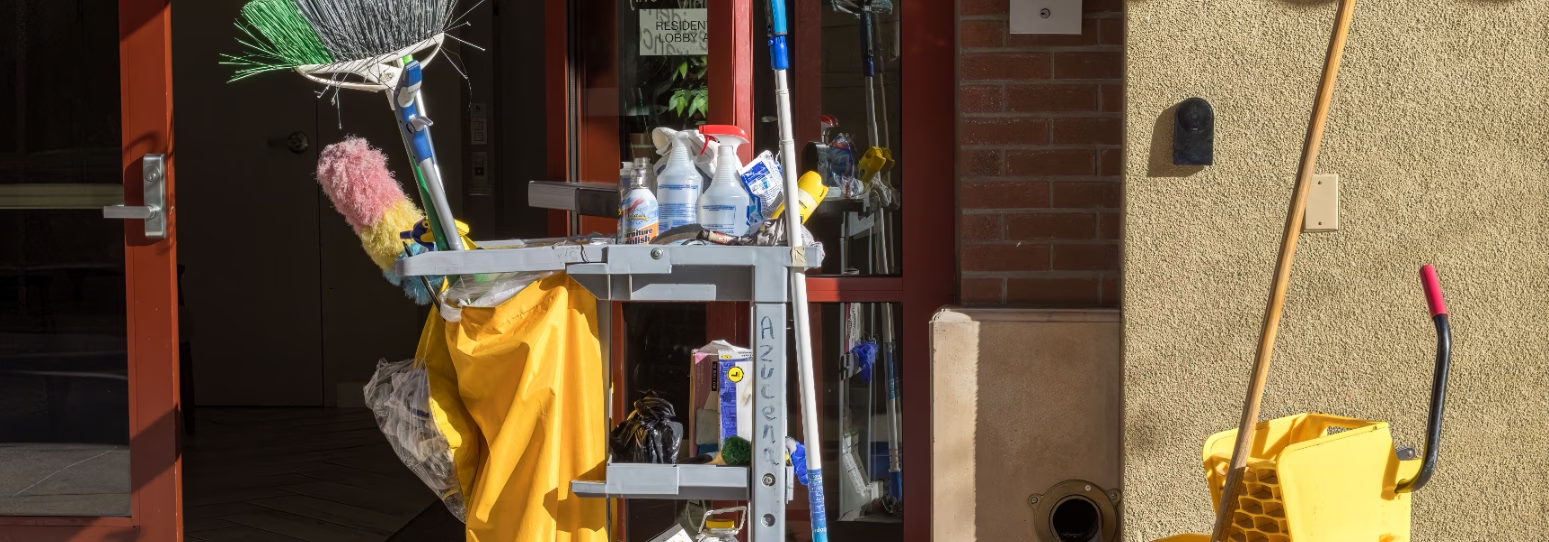
Safety directly impacts your building’s operational continuity. Consider the data: cleaning occupations face significant risks, with slips, trips, and falls making up roughly 45% of non-fatal injuries in the sector.
To control risk on your property, ensure your vendor mandates:
- Comprehensive Job Hazard Assessments: Conducted before services begin to identify risk zones.
- No-Cost PPE: OSHA requires employers to provide equipment like chemical-resistant gloves and slip-resistant footwear at no cost to the worker.
- Walking-Working Surface Rules: Strict protocols for wet floor signage, drainage, and off-peak cleaning schedules to protect both the cleaners and your tenants.
4. Verifiable Training and Documentation
A vendor's safety plan is only as good as the paper it’s printed on—unless there is proof of execution. Alarmingly, only about 41% of small cleaning businesses conduct annual hazard communication training.
When auditing your cleaning vendors, demand to see:
- Documented Training Logs: Showing onboarding and annual/biennial refreshers on chemical management, PPE, equipment operation, and bloodborne pathogens.
- Language Accessibility: Safety training must be delivered in a language and literacy level the workers fully understand.
- Specialized Protocols: For healthcare or high-risk environments, look for documented adherence to CDC infection control and high-touch disinfection guidelines.
5. The Strategy: Streamlining Oversight with VendorAccess
Manually tracking expiration dates for dozens of vendors across a property portfolio is an administrative nightmare. That is exactly why we built VendorAccess.com.
VendorAccess serves as your centralized compliance ecosystem, acting as a shield for your property and a tool for your operations:
- Automated Tracking: We centralize COIs, safety programs, and training records, automatically flagging upcoming policy expirations or gaps.
- Contractor Accountability: If a prime contractor uses subcontractors, VendorAccess helps ensure those secondary tiers meet the exact same compliance benchmarks.
- Audit Readiness: Keep critical compliance histories on file securely for the recommended three to five years, giving you a digital, searchable paper trail to instantly lower legal and regulatory exposure during an incident.